Cryptonim AI Trading Roadmap for Achieving Success in 2023
The recent trends indicate that a data-driven strategy combined with market analysis can significantly enhance trading performance. By using machine learning algorithms, traders are advised to focus on predictive analytics to anticipate market movements with greater accuracy.
Implementing automated trading systems tailored to individual risk profiles enables more efficient execution of buy and sell orders. Prioritizing time-sensitive actions based on real-time data feeds can lead to superior results and quicker reaction times during market fluctuations.
Developing a reliable risk management framework is indispensable. This entails regular portfolio assessments and the establishment of clear exit strategies, which can prevent significant losses and ensure sustained growth over time. Engaging in continuous education about market developments allows for informed decision-making, essential for capitalizing on emerging opportunities.
Understanding Cryptonim AI's Core Features
Use advanced data analytics tools incorporated within this platform to forecast market trends. The system processes vast amounts of historical data, enabling precise predictions based on real-time metrics.
Use the automated trading algorithms. These algorithms analyze multiple parameters instantaneously, offering execution speed far superior to manual methods. Setting parameters allows for tailored trading strategies that align with individual risk profiles.
The user-friendly dashboard presents critical insights at a glance. Customize the interface to track specific assets and receive alerts on price changes or significant market movements, ensuring timely decisions.
Exploit the educational resources available, including tutorials and webinars. These materials enhance understanding of trading concepts and platform functionalities, making it easier to capitalize on opportunities.
Integrate with various exchanges through the API feature, simplifying the trading process across multiple platforms. This feature enhances flexibility, providing access to a wider range of assets.
Use sentiment analysis tools that gauge market sentiment through social media trends and news articles. This analysis can lead to informed investment choices based on public perception.
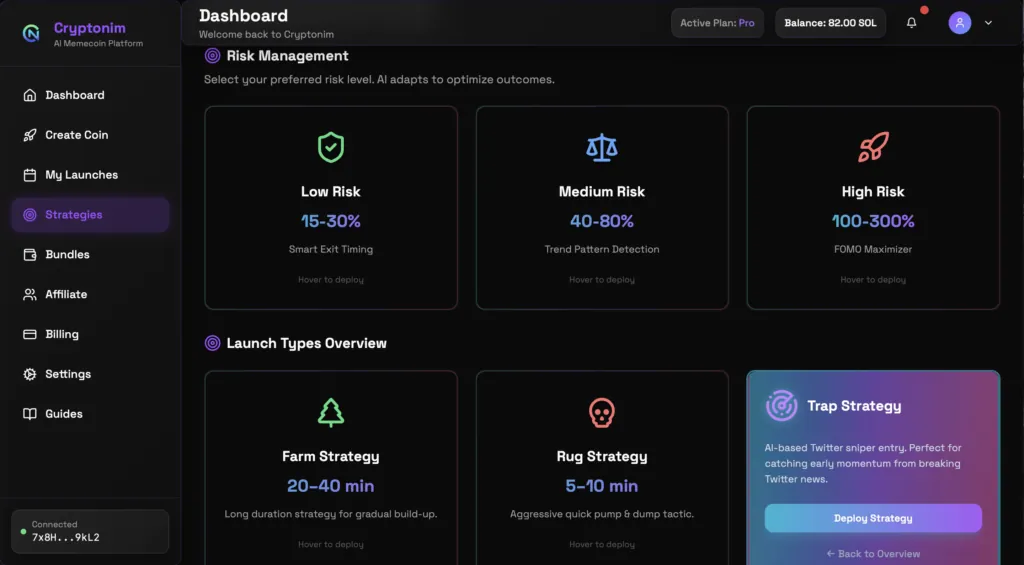
Employ risk management settings to protect your capital. Implement stop-loss and take-profit orders to automate exit strategies, minimizing emotional decisions during trading.
Finally, participate in community forums to gain insights from fellow users. Engaging with others can provide fresh perspectives and strategies that enhance trading effectiveness.
What Algorithms Drive the Trading Strategies?
Use machine learning algorithms, particularly supervised learning techniques like regression analysis and support vector machines. These methods excel in identifying patterns in historical price data, enabling accurate predictions of future price movements.
Incorporate reinforcement learning to develop trading policies that adapt to market conditions. This approach allows the algorithm to learn from past trades and improve its decision-making over time.
Deploy time series analysis, such as ARIMA models, to forecast market trends and consider external factors influencing prices. This statistical technique analyzes the temporal dynamics of price series, helping traders assess optimal entry and exit points.
Integrate genetic algorithms for optimizing trading strategies. These algorithms simulate the process of natural selection, iterating through various combinations of trading parameters to identify the most profitable configurations.
Use natural language processing (NLP) to analyze news feeds, social media, and financial reports. By extracting sentiment and context, NLP can enhance predictive models and provide insights into market sentiment shifts.
Ensure implementation of backtesting frameworks to evaluate the performance of algorithms using historical data. This step is critical for validating strategy effectiveness and optimizing risk management parameters before deploying in live markets.
Adopt ensemble methods, combining predictions from multiple algorithms to improve robustness and accuracy. Techniques like bagging and boosting can significantly enhance performance by aggregating results from different models.
Focus on creating transparent and interpretable algorithms, letting traders understand the rationale behind each trading decision. Explainable models help in building trust and facilitate adjustments based on market feedback.
How Does User Data Influence Decision Making?
User data acts as a cornerstone in forming strategies for market engagement. By analyzing trading patterns, preferences, and behavioral metrics, platforms can tailor experiences to individual users. For instance, employing machine learning algorithms enables predictive analytics, which can forecast market trends based on historical data and current user activities.
Implementation of segmentation techniques, where users are categorized based on trading styles or risk appetite, enhances targeted marketing efforts. This increases the efficacy of promotional campaigns by aligning products with user needs. For example, a user primarily investing in cryptocurrencies may receive insights tailored to altcoin trends, whereas a forex trader could be notified about currency fluctuations.
also,, real-time feedback mechanisms allow platforms to gather user impressions on services and features, which informs iterative improvements. Gathering insights through surveys or user reviews can pinpoint areas needing enhancement, directly impacting decision-making processes related to feature development or user interface design.
Another key aspect is the ethical use of data. Ensuring compliance with data protection regulations builds user trust. Transparent data practices lead to higher user engagement and better communication, as users feel more secure sharing their information.
Integrating AI with user data further amplifies decision-making capabilities. Natural language processing can analyze social media sentiment regarding particular assets, offering additional context that might influence trading decisions. This holistic view of data - combining direct user input and broader market sentiment - shapes more informed and responsive trading strategies.
Implementing Cryptonim AI in Daily Trading
Use real-time data analysis tools to enhance decision-making. Set alerts based on key price movements, volume changes, or specific technical indicators to respond swiftly to market shifts.
Use predictive analytics to identify potential trading opportunities. Analyze historical data patterns to forecast price trends, using machine learning algorithms for improved accuracy.
- Integrate sentiment analysis tools that assess social media and news articles.
- Use chatbots for customer interaction, providing immediate responses and insights.
- Employ backtesting frameworks to evaluate trading strategies against historical data before live implementation.
Incorporate automated trading systems to execute trades based on pre-defined criteria. This reduces emotional bias while increasing response time to market fluctuations.
- Establish clear risk management protocols, including stop-loss orders to minimize potential losses.
- Regularly review and adjust trading strategies based on performance metrics and market conditions.
- Stay informed about regulatory changes in cryptocurrency markets to ensure compliance.
Use portfolio management tools to track and optimize asset allocation. Regularly reassess holdings to align with shifting market dynamics.
Engage in continuous learning through webinars and online courses focused on artificial intelligence applications in trading. This knowledge will enhance skills and adapt strategies to current trends.